This is the commercial I most like, it is of Indigo Love of Reading Fund and gives a public message of the crisis in Canada, that Kids and teachers in elementary schools need help. Due to the lack of funds and library books.
Showing posts with label salman ali. Show all posts
Showing posts with label salman ali. Show all posts
Wednesday, January 6, 2010

Saturday, December 26, 2009
Marketing Intermediaries
Independent firms which assist in the flow of goods and services from producers to end-user; they include agents, wholesalers and retailers; marketing services agencies; physical distribution companies.
Some of which are described briefly below:
Retailers
Retailers operate outlets that trade directly with household customers. Retailers can be classified in several ways:
• Type of goods being sold( e.g. clothes, grocery, furniture) • Type of service (e.g. self-service, counter-service) • Size (e.g. corner shop; superstore) • Ownership (e.g. privately-owned independent; public-quoted retail group • Location (e.g. rural, city-centre, out-of-town) • Brand (e.g. nationwide retail brands; local one-shop name)
Wholesalers
Wholesalers stock a range of products from several producers. The role of the wholesaler is to sell onto retailers. Wholesalers usually specialize in particular products.
Distributors and dealers
Distributors or dealers have a similar role to wholesalers - that of taking products from producers and selling them on. However, they often sell onto the end customer rather than a retailer. They also usually have a much narrower product range. Distributors and dealers are often involved in providing after-sales service.
Franchises
Franchises are independent businesses that operate a branded product (usually a service) in exchange for a license fee and a share of sales.
Agents
Agents sell the products and services of producers in return for a commission (a percentage of the sales revenues)
Reference: http://wiki.answers.com/Q/What_are_%27marketing_intermediaries%27
My opinion: The intermediary are very important for every company specially manufacturing because it adds value to the marketing of the product by bringing in specialization, marketing knowledge, capacity to segment the market, and selling skills which help marketers to implement their marketing strategies effectively. They also increases convenience to both the producer and the consumer by offering effective delivery and pre and post-purchase customer service as well as facilitating manufacturer services.
Independent firms which assist in the flow of goods and services from producers to end-user; they include agents, wholesalers and retailers; marketing services agencies; physical distribution companies.
Some of which are described briefly below:
Retailers
Retailers operate outlets that trade directly with household customers. Retailers can be classified in several ways:
• Type of goods being sold( e.g. clothes, grocery, furniture) • Type of service (e.g. self-service, counter-service) • Size (e.g. corner shop; superstore) • Ownership (e.g. privately-owned independent; public-quoted retail group • Location (e.g. rural, city-centre, out-of-town) • Brand (e.g. nationwide retail brands; local one-shop name)
Wholesalers
Wholesalers stock a range of products from several producers. The role of the wholesaler is to sell onto retailers. Wholesalers usually specialize in particular products.
Distributors and dealers
Distributors or dealers have a similar role to wholesalers - that of taking products from producers and selling them on. However, they often sell onto the end customer rather than a retailer. They also usually have a much narrower product range. Distributors and dealers are often involved in providing after-sales service.
Franchises
Franchises are independent businesses that operate a branded product (usually a service) in exchange for a license fee and a share of sales.
Agents
Agents sell the products and services of producers in return for a commission (a percentage of the sales revenues)
Reference: http://wiki.answers.com/Q/What_are_%27marketing_intermediaries%27
My opinion: The intermediary are very important for every company specially manufacturing because it adds value to the marketing of the product by bringing in specialization, marketing knowledge, capacity to segment the market, and selling skills which help marketers to implement their marketing strategies effectively. They also increases convenience to both the producer and the consumer by offering effective delivery and pre and post-purchase customer service as well as facilitating manufacturer services.
ROI
Return on marketing investment (ROMI)
Return on marketing investment (ROMI) is a metric used to measure the overall effectiveness of a marketing campaign to help marketers make better decisions about allocating future investments. ROMI is usually used in online marketing, though integrated campaigns that span print, broadcast and social media may also rely on it for determining overall success. ROMI is a subset of ROI (return on investment).
In the simplest sense, ROMI is measured by comparing revenue gains against marketing investment. This calculation, however, reflects only the direct impact of marketing investment on a business's revenue. As a result, many digital marketers include dwell time or brand awareness in their ROMI metrics in an effort to quantify less tangible benefits and target future campaigns more effectively. According to ROMI expert Gary R. Powell, with the right data and analytics, marketers can deliver between 8% - 15% increased revenue, profit and market share to the client without any increase in marketing investment.
Return on marketing opportunity (ROMO) is a similar metric used by digital marketers that focused on the wider influence of a campaign. Both terms are part of a wider attempt in the industry to measure impact-based advertising.
Reference: http://whatis.techtarget.com/definition/return-on-marketing-investment--romi-.html
My opinion: Return on Marketing Investment is a tool for any business to improve their ability to produce real results in revenue growth. Marketing ROI is important for every organization. Without a significant return on marketing investment the company won't meet its' objectives. Therefore it is important for every marketing manager to design such marketing strategies through which company creates good retunes.
Return on marketing investment (ROMI) is a metric used to measure the overall effectiveness of a marketing campaign to help marketers make better decisions about allocating future investments. ROMI is usually used in online marketing, though integrated campaigns that span print, broadcast and social media may also rely on it for determining overall success. ROMI is a subset of ROI (return on investment).
In the simplest sense, ROMI is measured by comparing revenue gains against marketing investment. This calculation, however, reflects only the direct impact of marketing investment on a business's revenue. As a result, many digital marketers include dwell time or brand awareness in their ROMI metrics in an effort to quantify less tangible benefits and target future campaigns more effectively. According to ROMI expert Gary R. Powell, with the right data and analytics, marketers can deliver between 8% - 15% increased revenue, profit and market share to the client without any increase in marketing investment.
Return on marketing opportunity (ROMO) is a similar metric used by digital marketers that focused on the wider influence of a campaign. Both terms are part of a wider attempt in the industry to measure impact-based advertising.
Reference: http://whatis.techtarget.com/definition/return-on-marketing-investment--romi-.html
My opinion: Return on Marketing Investment is a tool for any business to improve their ability to produce real results in revenue growth. Marketing ROI is important for every organization. Without a significant return on marketing investment the company won't meet its' objectives. Therefore it is important for every marketing manager to design such marketing strategies through which company creates good retunes.
Marketing Control

Marketing Control
There is no planning without control. Marketing control is the process of monitoring the proposed plans as they proceed and adjusting where necessary. If an objective states where you want to be and the plan sets out a road map to your destination, then control tells you if you are on the right route or if you have arrived at your destination.
There is no planning without control. Marketing control is the process of monitoring the proposed plans as they proceed and adjusting where necessary. If an objective states where you want to be and the plan sets out a road map to your destination, then control tells you if you are on the right route or if you have arrived at your destination.
Control involves measurement, evaluation, and monitoring. Resources are scarce and costly so it is important to control marketing plans. Control involves setting standards. The marketing manager will than compare actual progress against the standards. Corrective action (if any) is then taken. If corrective action is taken, an investigation will also need to be undertaken to establish precisely why the difference occurred.
There are many approaches to control:
Market share analysis.
Sales analysis.
Quality controls.
Ratio analysis.
Feedback from customers satisfaction surveys.
Cash flow statements.
Customer Relationship Management (CRM) systems.
Sales per thousand customers, per factory, by segment.
Location of buyers and potential buyers.
Activities of competitors to aspects of your plan.
Distributor support.
Performance of any promotional activities.
Market reaction/acceptance to pricing polices.
Service levels.
Reference: http://www.marketingteacher.com/Lessons/lesson_control.htm
My opinion: Marketing control is simply an activity through which marketing manager’s checks that marketing plans are producing the desired results or not. It helps to evaluate actual performance, and able managers to reduce the differences between desired and actual performance.
There are many approaches to control:
Market share analysis.
Sales analysis.
Quality controls.
Ratio analysis.
Feedback from customers satisfaction surveys.
Cash flow statements.
Customer Relationship Management (CRM) systems.
Sales per thousand customers, per factory, by segment.
Location of buyers and potential buyers.
Activities of competitors to aspects of your plan.
Distributor support.
Performance of any promotional activities.
Market reaction/acceptance to pricing polices.
Service levels.
Reference: http://www.marketingteacher.com/Lessons/lesson_control.htm
My opinion: Marketing control is simply an activity through which marketing manager’s checks that marketing plans are producing the desired results or not. It helps to evaluate actual performance, and able managers to reduce the differences between desired and actual performance.
Friday, December 25, 2009
Partner Relationship Management
A partner relationship management strategy seeks to improve business processes by improving communications between a business and its channel partners. In some ways it is closely related to customer relationship management. However, in many cases, partner relationship management is a term specifically applied to relationships between businesses.
Partner relationship management can take a number of different forms. In some cases, delivery of a product is needed during specific times of the day. For example, in some shipping and receiving departments, suppliers must deliver within a certain time frame. In the busiest of locations, that window could be as little as 30 minutes. When traveling across a large geographic region, that can be a hard target to hit.
Using software and other communication tools often provided through a partner relationship management strategy, suppliers, shippers and the end users can keep in constant contact with each other. This means the end user will be able to know where each item is each step in the process and when to expect it. Depending on the situation, this may allow a factory to adjust production so that the entire operation does not shut due to supply concerns.
Partner relationship management is also important for a manufacturer and reseller or retailer. On this side, software allows the producer to understand when a certain product is in demand and allows that producer to adjust his processes likewise. Without this benefit, a manufacturer would need to wait for an order from the retailer or reseller. That could delay the process and thus allow both sides to miss out on valuable sales.
In addition to communication, partner relationship management can also provide services in other areas. For example, it may include a partner loyalty component, which provides a benefit to both companies. As those relationships are solidified, it provides a good customer base on which both can depend.
Though the idea of forming business-to-business relationships is not a new idea, the extent to which it is taken in a partner relationship management situation is. This is due to a number of reasons. First, with business taking advantage of the Internet, it makes improved communication possible. Second, with business becoming more specialized in the services they provide, it is creating a greater interdependency between businesses and thus a need for enhanced partner relationship management applications. Third, with products and suppliers located all across the globe, a better system for real-time communication was needed.
Reference: http://www.wisegeek.com/what-is-partner-relationship-management.htm
My opinion: Partner Relationship Management is used to describe the methods and strategies for improving communications and relationships between other companies and their channel. Main reasons of this method include selling, commission, opportunity, marketing campaigns, inventory access, and other features designed to facilitate the relationship between manufacturers and others.
A partner relationship management strategy seeks to improve business processes by improving communications between a business and its channel partners. In some ways it is closely related to customer relationship management. However, in many cases, partner relationship management is a term specifically applied to relationships between businesses.
Partner relationship management can take a number of different forms. In some cases, delivery of a product is needed during specific times of the day. For example, in some shipping and receiving departments, suppliers must deliver within a certain time frame. In the busiest of locations, that window could be as little as 30 minutes. When traveling across a large geographic region, that can be a hard target to hit.
Using software and other communication tools often provided through a partner relationship management strategy, suppliers, shippers and the end users can keep in constant contact with each other. This means the end user will be able to know where each item is each step in the process and when to expect it. Depending on the situation, this may allow a factory to adjust production so that the entire operation does not shut due to supply concerns.
Partner relationship management is also important for a manufacturer and reseller or retailer. On this side, software allows the producer to understand when a certain product is in demand and allows that producer to adjust his processes likewise. Without this benefit, a manufacturer would need to wait for an order from the retailer or reseller. That could delay the process and thus allow both sides to miss out on valuable sales.
In addition to communication, partner relationship management can also provide services in other areas. For example, it may include a partner loyalty component, which provides a benefit to both companies. As those relationships are solidified, it provides a good customer base on which both can depend.
Though the idea of forming business-to-business relationships is not a new idea, the extent to which it is taken in a partner relationship management situation is. This is due to a number of reasons. First, with business taking advantage of the Internet, it makes improved communication possible. Second, with business becoming more specialized in the services they provide, it is creating a greater interdependency between businesses and thus a need for enhanced partner relationship management applications. Third, with products and suppliers located all across the globe, a better system for real-time communication was needed.
Reference: http://www.wisegeek.com/what-is-partner-relationship-management.htm
My opinion: Partner Relationship Management is used to describe the methods and strategies for improving communications and relationships between other companies and their channel. Main reasons of this method include selling, commission, opportunity, marketing campaigns, inventory access, and other features designed to facilitate the relationship between manufacturers and others.
Marketing Myopia
Short sighted and inward looking approach to marketing that focuses on the needs of the firm instead of defining the firm and its products in terms of the customers' needs and wants. Such self-centered firms fail to see and adjust to the rapid changes in their markets and, despite their previous eminence, falter, fall, and disappear. This concept was discussed in an article (titled 'Marketing Myopia,' in July-August 1960 issue of Harvard Business Review) by Harvard Business School emeritus professor of marketing, Theodore C. Levitt (1925-), who suggests that firms get trapped in this bind because they omit to ask the vital question, "What business are we in?"
Marketing Myopia is the short sighted look of the managers in wrongly identifying the category and goals of the company, not looking at the whole industry of the product neglecting the fields of opportunities in their area of industry, not listening to the customer's real
Reference: http://www.businessdictionary.com/definition/marketing-myopia.html
http://www.directessays.com/viewpaper/98507.html
My opinion: Most of the small or inexperienced companies usually emphasizes on selling, not on marketing. This is a mistake, because selling focuses on the needs of the seller, whereas marketing concentrates on the needs of the buyer as a result customer becomes unsatisfied and the customer relationship starts diminishing.
Short sighted and inward looking approach to marketing that focuses on the needs of the firm instead of defining the firm and its products in terms of the customers' needs and wants. Such self-centered firms fail to see and adjust to the rapid changes in their markets and, despite their previous eminence, falter, fall, and disappear. This concept was discussed in an article (titled 'Marketing Myopia,' in July-August 1960 issue of Harvard Business Review) by Harvard Business School emeritus professor of marketing, Theodore C. Levitt (1925-), who suggests that firms get trapped in this bind because they omit to ask the vital question, "What business are we in?"
Marketing Myopia is the short sighted look of the managers in wrongly identifying the category and goals of the company, not looking at the whole industry of the product neglecting the fields of opportunities in their area of industry, not listening to the customer's real
Reference: http://www.businessdictionary.com/definition/marketing-myopia.html
http://www.directessays.com/viewpaper/98507.html
My opinion: Most of the small or inexperienced companies usually emphasizes on selling, not on marketing. This is a mistake, because selling focuses on the needs of the seller, whereas marketing concentrates on the needs of the buyer as a result customer becomes unsatisfied and the customer relationship starts diminishing.
Thursday, December 24, 2009
MIS

Marketing Information System
Set of procedures and practices employed in analyzing and assessing marketing information, gathered continuously from sources inside and outside of a firm. Timely marketing information provides basis for decisions such as product development or improvement, pricing, packaging, distribution, media selection, and promotion.
Set of procedures and practices employed in analyzing and assessing marketing information, gathered continuously from sources inside and outside of a firm. Timely marketing information provides basis for decisions such as product development or improvement, pricing, packaging, distribution, media selection, and promotion.
Reference: http://www.businessdictionary.com/definition/marketing-information-system.html
http://www.fao.org/docrep/w3241e/w3241e0a.html
my opinion: Marketing Information System is an important system through which we getter and manage information, analyze it and deliver it to needed people. There is a greater need of MIS for any company because to process order faster and with more accuracy, to improve customer relationship, to standardize customer service quality, to be able to see the sales trend, to be able to allocate budget smartly etc.
http://www.fao.org/docrep/w3241e/w3241e0a.html
my opinion: Marketing Information System is an important system through which we getter and manage information, analyze it and deliver it to needed people. There is a greater need of MIS for any company because to process order faster and with more accuracy, to improve customer relationship, to standardize customer service quality, to be able to see the sales trend, to be able to allocate budget smartly etc.
Customer equity
Customer equity:
It is the total combined customer lifetime values of all of a company’s customers.
In deciding the value of a company, it is important to know of how much value its customer base is in terms of future revenues. The greater the customer equity (CE), the more future revenue in the lifetime of its clients; this means that a company with a higher customer equity can get more money from its customers on average than another company that is identical in all other characteristics. As a result a company with higher customer equity is more valuable than one without it. It includes customers' goodwill and extrapolates it over the lifetime of the customers.
The term is a misnomer since the term has nothing to do with the traditional meaning of equity.
There are three drivers (factors) to customer equity, all of which refer to three sides of the same thing:
Value equity: What the customer assesses the value of the product or service provided by the company to be;
Brand equity: What the customer assesses the value of the brand is, above its objective value;
Retention equity: The tendency of the customer to stick with the brand even when it is priced higher than an otherwise equal product.
Reference: http://en.wikipedia.org/wiki/Customer_equity
My opinion: Customer equity is based on customer lifetime value, and an understanding of customer equity can be used to optimize the balance of investment in the acquisition and retention of customers. It is also known as customer capital and forms one component of the intellectual capital of an organization.
It is the total combined customer lifetime values of all of a company’s customers.
In deciding the value of a company, it is important to know of how much value its customer base is in terms of future revenues. The greater the customer equity (CE), the more future revenue in the lifetime of its clients; this means that a company with a higher customer equity can get more money from its customers on average than another company that is identical in all other characteristics. As a result a company with higher customer equity is more valuable than one without it. It includes customers' goodwill and extrapolates it over the lifetime of the customers.
The term is a misnomer since the term has nothing to do with the traditional meaning of equity.
There are three drivers (factors) to customer equity, all of which refer to three sides of the same thing:
Value equity: What the customer assesses the value of the product or service provided by the company to be;
Brand equity: What the customer assesses the value of the brand is, above its objective value;
Retention equity: The tendency of the customer to stick with the brand even when it is priced higher than an otherwise equal product.
Reference: http://en.wikipedia.org/wiki/Customer_equity
My opinion: Customer equity is based on customer lifetime value, and an understanding of customer equity can be used to optimize the balance of investment in the acquisition and retention of customers. It is also known as customer capital and forms one component of the intellectual capital of an organization.
The Marketing Environment

The marketing environment surrounds and impacts upon the organization. There are three key perspectives on the marketing environment, namely the 'macro-environment,' the 'micro-environment' and the 'internal environment'.
The micro-environment
This environment influences the organization directly. It includes suppliers that deal directly or indirectly, consumers and customers, and other local stakeholders. Micro tends to suggest small, but this can be misleading. In this context, micro describes the relationship between firms and the driving forces that control this relationship. It is a more local relationship, and the firm may exercise a degree of influence.
The macro-environment
This includes all factors that can influence and organization, but that are out of their direct control. A company does not generally influence any laws (although it is accepted that they could lobby or be part of a trade organization). It is continuously changing, and the company needs to be flexible to adapt. There may be aggressive competition and rivalry in a market. Globalization means that there is always the threat of substitute products and new entrants. The wider environment is also ever changing, and the marketer needs to compensate for changes in culture, politics, economics and technology.
The internal environment
All factors that are internal to the organization are known as the 'internal environment'. They are generally audited by applying the 'Five Ms' which are Men, Money, Machinery, Materials and Markets. The internal environment is as important for managing change as the external. As marketers we call the process of managing internal change internal marketing.
The micro-environment
This environment influences the organization directly. It includes suppliers that deal directly or indirectly, consumers and customers, and other local stakeholders. Micro tends to suggest small, but this can be misleading. In this context, micro describes the relationship between firms and the driving forces that control this relationship. It is a more local relationship, and the firm may exercise a degree of influence.
The macro-environment
This includes all factors that can influence and organization, but that are out of their direct control. A company does not generally influence any laws (although it is accepted that they could lobby or be part of a trade organization). It is continuously changing, and the company needs to be flexible to adapt. There may be aggressive competition and rivalry in a market. Globalization means that there is always the threat of substitute products and new entrants. The wider environment is also ever changing, and the marketer needs to compensate for changes in culture, politics, economics and technology.
The internal environment
All factors that are internal to the organization are known as the 'internal environment'. They are generally audited by applying the 'Five Ms' which are Men, Money, Machinery, Materials and Markets. The internal environment is as important for managing change as the external. As marketers we call the process of managing internal change internal marketing.
Wednesday, December 23, 2009
The Value Chain
To analyze the specific activities through which firms can create a competitive advantage, it is useful to model the firm as a chain of value-creating activities. Michael Porter identified a set of interrelated generic activities common to a wide range of firms. The resulting model is known as the value chain and is depicted below:
Primary Value Chain Activities
InboundLogistics> Operations> OutboundLogistics> Marketing& Sales> Service
The goal of these activities is to create value that exceeds the cost of providing the product or service, thus generating a profit margin.
· Inbound logistics include the receiving, warehousing, and inventory control of input materials.
· Operations are the value-creating activities that transform the inputs into the final product.
· Outbound logistics are the activities required to get the finished product to the customer, including warehousing, order fulfillment, etc.
· Marketing & Sales are those activities associated with getting buyers to purchase the product, including channel selection, advertising, pricing, etc.
· Service activities are those that maintain and enhance the product's value including customer support, repair services, etc.
Any or all of these primary activities may be vital in developing a competitive advantage. For example, logistics activities are critical for a provider of distribution services, and service activities may be the key focus for a firm offering on-site maintenance contracts for office equipment.
Reference: http://www.quickmba.com/strategy/value-chain/
My opinion: Value Chain is a series of departments that carry out value creating activities to design, produce and deliver firms product. It describes the activities that take place in a business for example Primary Activities and Support Activities, Value Chain Analysis tells which activities are best and which are not.
Primary Value Chain Activities
InboundLogistics> Operations> OutboundLogistics> Marketing& Sales> Service
The goal of these activities is to create value that exceeds the cost of providing the product or service, thus generating a profit margin.
· Inbound logistics include the receiving, warehousing, and inventory control of input materials.
· Operations are the value-creating activities that transform the inputs into the final product.
· Outbound logistics are the activities required to get the finished product to the customer, including warehousing, order fulfillment, etc.
· Marketing & Sales are those activities associated with getting buyers to purchase the product, including channel selection, advertising, pricing, etc.
· Service activities are those that maintain and enhance the product's value including customer support, repair services, etc.
Any or all of these primary activities may be vital in developing a competitive advantage. For example, logistics activities are critical for a provider of distribution services, and service activities may be the key focus for a firm offering on-site maintenance contracts for office equipment.
Reference: http://www.quickmba.com/strategy/value-chain/
My opinion: Value Chain is a series of departments that carry out value creating activities to design, produce and deliver firms product. It describes the activities that take place in a business for example Primary Activities and Support Activities, Value Chain Analysis tells which activities are best and which are not.
product-Market Expansion Grid

product-Market Expansion Grid
Ian Ansoff has proposed a useful framework called the product/market expansion grid for detecting new intensive growth opportunities. There are four strategies, one for each of the quadrants:
Ian Ansoff has proposed a useful framework called the product/market expansion grid for detecting new intensive growth opportunities. There are four strategies, one for each of the quadrants:

Market Penetration Strategy: When the current product is in the current market.
Market-Development Strategy: When the current product is launched in a new market.
Product-Development Strategy: When a new product is launched in the current market.
Diversification: When a new product is launched in a new market
Customer lifetime value
Customer lifetime value
In marketig, customer lifetime value (CLV), lifetime customer value (LCV), or lifetime value (LTV) and a new concept of "customer life cycle management" is the present value of the future cash flows attributed to the customer relationship. Use of customer lifetime value as a marketing metric tends to place greater emphasis on customer service and long-term customer satisfaction, rather than on maximizing short-term sales.
Reference: http://en.wikipedia.org/wiki/Customer_lifetime_value
My opinion: Marketing managers today are engaged with collecting more and more information about their customers then before because with the help of this information the can able to determine the customer lifetime value which helps marketing managers to arrive at the monetary value associated with long term relationship with any customer.
In marketig, customer lifetime value (CLV), lifetime customer value (LCV), or lifetime value (LTV) and a new concept of "customer life cycle management" is the present value of the future cash flows attributed to the customer relationship. Use of customer lifetime value as a marketing metric tends to place greater emphasis on customer service and long-term customer satisfaction, rather than on maximizing short-term sales.
Reference: http://en.wikipedia.org/wiki/Customer_lifetime_value
My opinion: Marketing managers today are engaged with collecting more and more information about their customers then before because with the help of this information the can able to determine the customer lifetime value which helps marketing managers to arrive at the monetary value associated with long term relationship with any customer.
customer relation groups


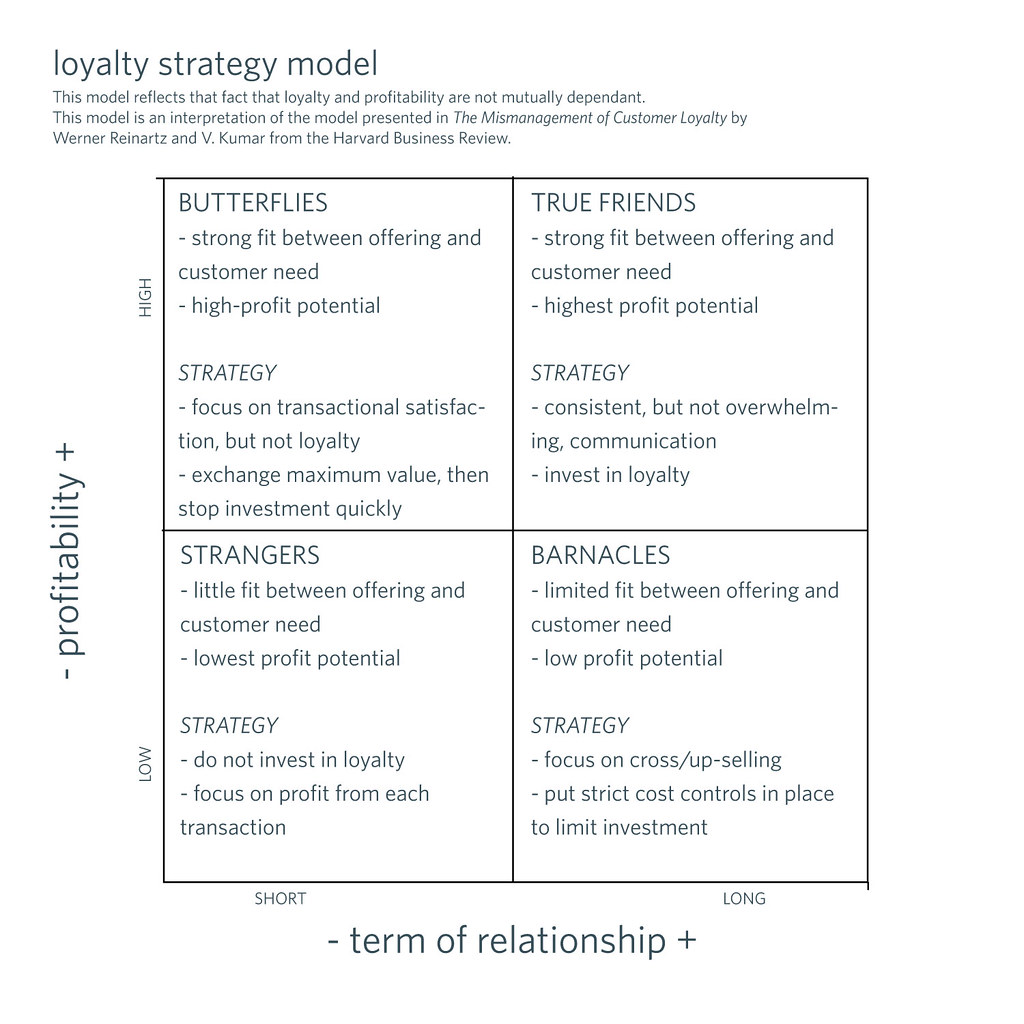
with the help of above tool marketers decides or builds the right relationship with right customers by classifying them on the bases of butterflies, true friends, strangers, and barnacles.
Friday, December 18, 2009
New Product Development Process Stage 8
Commercialization
Commercialization is the process or cycle of introducing a new product into the market. The actual launch of a new product is the final stage of new product development, and the one where the most money will have to be spent for advertising, sales promotion, and other marketing efforts
If market testing displays promising results the product is ready to be introduced to a wider market. Some firms introduce or roll-out the product in waves with parts of the market receiving the product on different schedules. This allows the company to ramp up production in a more controlled way and to fine tune the marketing mix as the product is distributed to new areas.
Reference: http://en.wikipedia.org/wiki/Commercialization
http://www.knowthis.com/principles-of-marketing-tutorials/managing-products/product-development-steps-6-7/
My opinion: Commercialization means launching the product by making advertisements and other promotions to fill the distribution pipeline with product.
Commercialization is the process or cycle of introducing a new product into the market. The actual launch of a new product is the final stage of new product development, and the one where the most money will have to be spent for advertising, sales promotion, and other marketing efforts
If market testing displays promising results the product is ready to be introduced to a wider market. Some firms introduce or roll-out the product in waves with parts of the market receiving the product on different schedules. This allows the company to ramp up production in a more controlled way and to fine tune the marketing mix as the product is distributed to new areas.
Reference: http://en.wikipedia.org/wiki/Commercialization
http://www.knowthis.com/principles-of-marketing-tutorials/managing-products/product-development-steps-6-7/
My opinion: Commercialization means launching the product by making advertisements and other promotions to fill the distribution pipeline with product.
New Product Development Process Stage 7
Market Testing
Products surviving to Step 6 are ready to be tested as real products. In some cases the marketer accepts what was learned from concept testing and skips over market testing to launch the idea as a fully marketed product. But other companies may seek more input from a larger group before moving to commercialization. The most common type of market testing makes the product available to a selective small segment of the target market (e.g., one city), which is exposed to the full marketing effort as they would be to any product they could purchase. In some cases, especially with consumer products sold at retail stores, the marketer must work hard to get the product into the test market by convincing distributors to agree to purchase and place the product on their store shelves. In more controlled test markets distributors may be paid a fee if they agree to place the product on their shelves to allow for testing. Another form of market testing found with consumer products is even more controlled with customers recruited to a “laboratory” store where they are given shopping instructions. Product interest can then be measured based on customer’s shopping response. Finally, there are several high-tech approaches to market testing including virtual reality and computer simulations. With virtual reality testing customers are exposed to a computer-projected environment, such as a store, and are asked to locate and select products. With computer simulations customers may not be directly involved at all. Instead certain variables are entered into a sophisticated computer program and estimates of a target market’s response are calculated.
Reference: http://www.knowthis.com/principles-of-marketing-tutorials/managing-products/product-development-steps-6-7
My opinion: This is where the rubber meets the road and you need to find out if people are actually willing to buy your new and improved product or not. Be ready to make instant changes, if necessary, including raising or lowering the price or offering other incentives to move the product.
Products surviving to Step 6 are ready to be tested as real products. In some cases the marketer accepts what was learned from concept testing and skips over market testing to launch the idea as a fully marketed product. But other companies may seek more input from a larger group before moving to commercialization. The most common type of market testing makes the product available to a selective small segment of the target market (e.g., one city), which is exposed to the full marketing effort as they would be to any product they could purchase. In some cases, especially with consumer products sold at retail stores, the marketer must work hard to get the product into the test market by convincing distributors to agree to purchase and place the product on their store shelves. In more controlled test markets distributors may be paid a fee if they agree to place the product on their shelves to allow for testing. Another form of market testing found with consumer products is even more controlled with customers recruited to a “laboratory” store where they are given shopping instructions. Product interest can then be measured based on customer’s shopping response. Finally, there are several high-tech approaches to market testing including virtual reality and computer simulations. With virtual reality testing customers are exposed to a computer-projected environment, such as a store, and are asked to locate and select products. With computer simulations customers may not be directly involved at all. Instead certain variables are entered into a sophisticated computer program and estimates of a target market’s response are calculated.
Reference: http://www.knowthis.com/principles-of-marketing-tutorials/managing-products/product-development-steps-6-7
My opinion: This is where the rubber meets the road and you need to find out if people are actually willing to buy your new and improved product or not. Be ready to make instant changes, if necessary, including raising or lowering the price or offering other incentives to move the product.
New Product Development Process Stage 6
PRODUCT DEVELOPMEN
Ideas passing through business analysis are given serious consideration for development. Companies direct their research and development teams to construct an initial design or prototype of the idea. Marketers also begin to construct a marketing plan for the product. Once the prototype is ready the marketer seeks customer input. However, unlike the concept testing stage where customers were only exposed to the idea, in this step the customer gets to experience the real product as well as other aspects of the marketing mix, such as advertising, pricing, and distribution options (e.g., retail store, direct from company, etc.). Favorable customer reaction helps solidify the marketer’s decision to introduce the product and also provides other valuable information such as estimated purchase rates and understanding how the product will be used by the customer. Reaction that is less favorable may suggest the need for adjustments to elements of the marketing mix. Once these are made the marketer may again have the customer test the product. In addition to gaining customer feedback, this step is used to gauge the feasibility of large-scale, cost effective production for manufactured products.
Reference: http://www.knowthis.com/principles-of-marketing-tutorials/managing-products/product-development-steps
My opinion: Physically design and manufacture the product and produce a physical prototype or mock-up and test the product its packaging in typical usage situations etc.Foe example McDonald's combines three simple products (a burger, fries, and soft drink) into another product that is separately branded (a McDonald's Happy Meal).
Ideas passing through business analysis are given serious consideration for development. Companies direct their research and development teams to construct an initial design or prototype of the idea. Marketers also begin to construct a marketing plan for the product. Once the prototype is ready the marketer seeks customer input. However, unlike the concept testing stage where customers were only exposed to the idea, in this step the customer gets to experience the real product as well as other aspects of the marketing mix, such as advertising, pricing, and distribution options (e.g., retail store, direct from company, etc.). Favorable customer reaction helps solidify the marketer’s decision to introduce the product and also provides other valuable information such as estimated purchase rates and understanding how the product will be used by the customer. Reaction that is less favorable may suggest the need for adjustments to elements of the marketing mix. Once these are made the marketer may again have the customer test the product. In addition to gaining customer feedback, this step is used to gauge the feasibility of large-scale, cost effective production for manufactured products.
Reference: http://www.knowthis.com/principles-of-marketing-tutorials/managing-products/product-development-steps
My opinion: Physically design and manufacture the product and produce a physical prototype or mock-up and test the product its packaging in typical usage situations etc.Foe example McDonald's combines three simple products (a burger, fries, and soft drink) into another product that is separately branded (a McDonald's Happy Meal).
New Product Development Process Stage 5
Business Analysis
A stage of the new product development process where a new product idea surviving the screening stage is subjected to a more sophisticated and detailed analysis. Because new product development costs accelerate sharply thereafter, it is imperative to eliminate inappropriate ideas at this stage. Usually, sales potentials are forecast, cost estimates are made, BREAK-EVEN POINTS are calculated, and in some cases more comprehensive decision procedures such as Bayesian analysis are used.
Reference: http://www.westburnpublishers.com/marketing-dictionary/b/business-analysis-%28new-product-development%29.aspx
My opinion: it estimate likely selling price based upon competition and customer feedback and estimate sales volume based upon size of market and also estimate profitability and breakeven point.
Thursday, December 17, 2009
New Product Development Process Stage 4
Marketing Strategy Development
Designing an initial marketing strategy for new product based on product concept.
Marketing Strategy may consists of three parts
First to describe the target market this may involves positioning market share and profit goal for first few years.
Second part of marketing strategy outlines the product’s planned price, distribution and marketing budget .
Third part may includes planning for long term sales, profit goals and marketing mix strategy (4 P’s)
reference: principles of marketing by philip kotler and gray armstrong
New Product Development Process Stage 3
Concept Development and Testing
Develop the marketing and engineering details
Who is the target market and who is the decision maker in the purchasing process?
What product features must the product incorporate?
What benefits will the product provide?
How will consumers react to the product?
How will the product be produced most cost effectively?
Prove feasibility through virtual computer aided rendering, and rapid prototyping
What will it cost to produce it?
Testing the Concept by asking a sample of prospective customers what they think of the idea. Usually via Choice Modeling
Reference: http://en.wikipedia.org/wiki/New_product_development
My opinion: I think concept development should be done with consumers early in the development process to guide direction and provide cost savings later in the process. There are many available tools which allow us to do simple, cost-effective testing at any point in the process.
New Product Development Process Stage 2
(Idea Screening Criteria)
You can screen and qualitatively determine the technical and business merit of your new product idea by providing answers to the following questions for each of the products that you would like to develop and commercialize.
1. What compelling evidence do you have which clearly demonstrates that you are the sole inventor of the subject new product idea? Please provide copies of the recorded idea from your notebook and/or other document.
2. Which Unmet needs is the product going to satisfy? Why should a customer buy this product and not that of competition (if it exists)?
3. Is there sufficient data to substantiate that these are truly Unmet needs for the customer?
4. Are there any barriers to entry for the new product, i.e. utility or design patents; trademarks, etc., etc.? If not, how easy it might be for someone to reverse engineer and copy the new product?
Note: Please provide us with complete copies of any patents or Provisional Patent Applications (PPA) you might have.
5. Which product features will satisfy these unmet needs? How?
6. What product claims will be made? Can these claims be substantiated through scientific and other compelling evidence?
7. Are design criteria established for the product?
8. Have preliminary product, component and packaging specifications been developed? Do you have any product models or prototypes made?
9. What type of testing will be done in order to evaluate the soundness of the product design?
10. How long should the product be expected to last?
11. Does the new product have sales potential in the targeted market? If so, provide numbers, etc.
12. Who is the competition?
13. How can they affect the new product's sales?
14. What are the most effective channels of distribution?
15. What are the prices of own and competitive, similar products? What is the expect net profit (after taxes) per each product sold?
16. Which are the major factors that influence potential users? Price, quality, brand name, service, etc.?
17. What is the best way to gain exposure in this market?
18. Are there any drawbacks to selling in this market?
19. Who are the best potential buyers and representatives for the new product?
20. Are there any potential licensing or joint venture partners in this market?
21. Do you have the required experience, know-how and resources for effectively marketing /selling and distributing the new product?
22. What level of funding do you need? Do you have a business / marketing plan which could justify how these funds would be allocated?
23. Why would a potential investor be willing to fund your new product efforts? What should he /she expect in return?
24. What are your underlined assumptions concerning the viability of this business?
25. What are your "What if" scenario concerning your projected estimates for market size, penetration potential, profit margin, etc.?
Reference: http://www.technobusiness-solutions.com/screen1.html
You can screen and qualitatively determine the technical and business merit of your new product idea by providing answers to the following questions for each of the products that you would like to develop and commercialize.
1. What compelling evidence do you have which clearly demonstrates that you are the sole inventor of the subject new product idea? Please provide copies of the recorded idea from your notebook and/or other document.
2. Which Unmet needs is the product going to satisfy? Why should a customer buy this product and not that of competition (if it exists)?
3. Is there sufficient data to substantiate that these are truly Unmet needs for the customer?
4. Are there any barriers to entry for the new product, i.e. utility or design patents; trademarks, etc., etc.? If not, how easy it might be for someone to reverse engineer and copy the new product?
Note: Please provide us with complete copies of any patents or Provisional Patent Applications (PPA) you might have.
5. Which product features will satisfy these unmet needs? How?
6. What product claims will be made? Can these claims be substantiated through scientific and other compelling evidence?
7. Are design criteria established for the product?
8. Have preliminary product, component and packaging specifications been developed? Do you have any product models or prototypes made?
9. What type of testing will be done in order to evaluate the soundness of the product design?
10. How long should the product be expected to last?
11. Does the new product have sales potential in the targeted market? If so, provide numbers, etc.
12. Who is the competition?
13. How can they affect the new product's sales?
14. What are the most effective channels of distribution?
15. What are the prices of own and competitive, similar products? What is the expect net profit (after taxes) per each product sold?
16. Which are the major factors that influence potential users? Price, quality, brand name, service, etc.?
17. What is the best way to gain exposure in this market?
18. Are there any drawbacks to selling in this market?
19. Who are the best potential buyers and representatives for the new product?
20. Are there any potential licensing or joint venture partners in this market?
21. Do you have the required experience, know-how and resources for effectively marketing /selling and distributing the new product?
22. What level of funding do you need? Do you have a business / marketing plan which could justify how these funds would be allocated?
23. Why would a potential investor be willing to fund your new product efforts? What should he /she expect in return?
24. What are your underlined assumptions concerning the viability of this business?
25. What are your "What if" scenario concerning your projected estimates for market size, penetration potential, profit margin, etc.?
Reference: http://www.technobusiness-solutions.com/screen1.html
Subscribe to:
Posts (Atom)